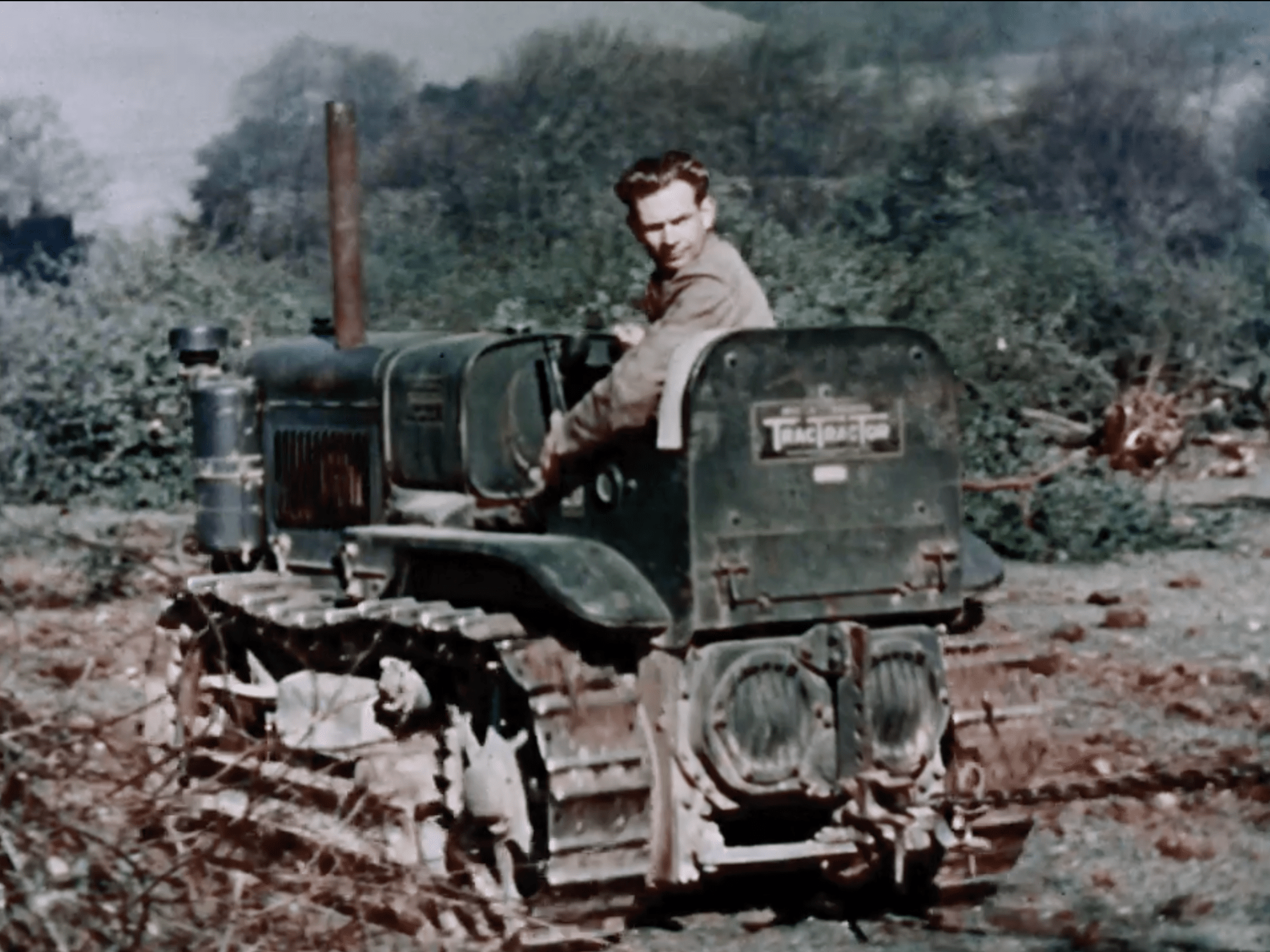
Image: A still from a short film by Kathleen Arrowsmith, ‘Land clearance on the farm’, 1939: BFI archive.
This post is by Guy Shrubsole.
The destruction of England’s chalk downland in the middle decades of the 20th century was arguably one of the first ecological disasters to be caught on camera.
Huge swathes of wildflower-rich chalk grassland were ploughed up – starting during the plough-up campaigns of the Second World War, and accelerating in the 1950s, 60s and 70s as intensive agriculture, production-focused farm subsidies, mechanisation and artificial fertilisers took hold.
We can see evidence of this in photographs and film footage from the time – such as this extraordinary short film shot in colour by Kathleen Arrowsmith, available to view on the BFI website. Shot in 1939, on the eve of the outbreak of war, the film shows a caterpillar-tracked tractor being used to rip up scrub on chalk downland in Berkshire.
This sort of evidence isn’t just valuable for the destruction it shows. It’s also important to efforts to restore chalk downland today. It helps us understand where chalk grassland once existed, within living memory, and may point to the survival of seed banks in the soil. Recreating a clear picture of our lost chalk downs – showing viscerally how much has been destroyed – can also help reawaken public and political interest in their restoration.
So did your grandparents witness a crime against nature? Do they have old photos or film footage of chalk downland, showing it either in a pristine state or in the process of being destroyed? If so, please get in touch with me via: ghostsofchalkcountry [at] gmail.com. Thanks!
 Ghosts of Chalk Country